
When someone helps a child, it is common to think the effect ends there: a plate of food, a new notebook, a warm coat in winter. But childhood is not an isolated chapter. Everything a child experiences in the early years stays with the person they will become, and that person will live alongside neighbors, coworkers and, one day, perhaps children of their own.
In this article, we explain why protecting a child is also a way of caring for a whole community.
Childhood is the foundation of everything
Children grow up fast. During this time, they learn to speak, to trust, to get along with others and to deal with frustration. A childhood with proper food, school, affection and safety gives them tools to move forward. A childhood marked by deprivation leaves gaps that are costly to fill later.
Economist James Heckman, who has studied the subject for decades, argues that investing early also pays off economically. According to material published by his team, high-quality education programs from birth to age five, aimed at disadvantaged children, show a 13% return on investment. In other words, caring well at the start of life avoids greater costs later, in health, education and social assistance.
Child poverty has many faces
UNICEF measures poverty among children and teenagers by looking at several dimensions at once: income, food, education, housing, water, sanitation, information and child labor. This way of measuring shows that lack of money is only part of the problem.
UNICEF Brazil's most recent study, released in January 2025, brought good news and a warning. The good news: multidimensional child poverty fell from 62.5% in 2017 to 55.9% in 2023. The warning: even with this drop, 28.8 million children and teenagers had at least one basic right violated in 2023. Food insecurity, for example, still affected 36.9% of them.
UNICEF insists on one point: children's rights must be guaranteed together. It is no use solving food and forgetting school, or guaranteeing school without caring for health.
The ripple effect
When a child is protected, the people around them also benefit. Think of a few simple examples:
- a well-fed child learns better and keeps up with the class;
- a teenager who finishes school has a better chance of finding work;
- someone who was cared for with respect learns to respect and care for others;
- a child who keeps ties with school and the neighborhood remains part of that place.
This multiplier effect is what makes child protection a collective investment. It does not benefit only one family. It benefits the street, the school, the health clinic and the local job market.
The law says this task belongs to everyone
Brazil's Statute of Children and Adolescents, in article 4, states that guaranteeing children's rights is the duty of the family, the community, society in general and the government, with absolute priority. The word "community" is there for a reason. The law recognizes that no child grows up well with help from the family alone or from the State alone.
The Technical Guidelines for Child and Adolescent Care Services, by CNAS and CONANDA, follow the same line. They ask that children in care take part in neighborhood life, attend school, festivities and public spaces, and build ties with the people around them. In other words, the community is part of care.
The children's cause mobilizes Brazilians
Brazilians already feel this responsibility. In the Brazil Giving Survey 2024, by IDIS, children were the cause most sought by those who give to organizations, cited by 32% of these donors. It came ahead of emergencies, health and fighting hunger.
This shows there is a will to help. The challenge is to turn this will into constant support that reaches those in need every day, and not only in moments of public commotion.
Where PROHACC fits into this story
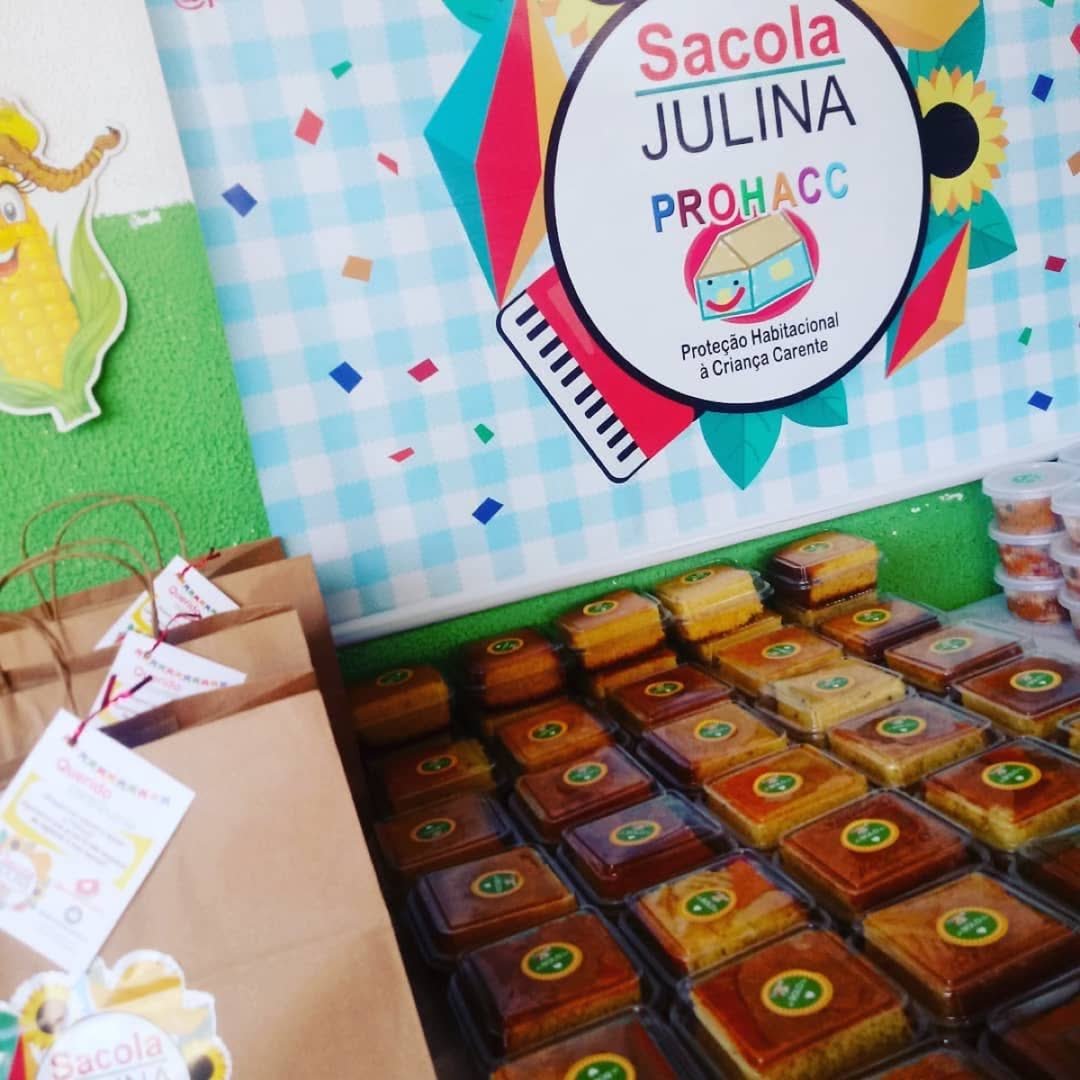
PROHACC has cared for about 18 children and teenagers in Perus, a neighborhood of the city of São Paulo, since 1997. We have no government funding agreement. The monthly expenses, such as food, clothing, medicine and house maintenance, depend on people who decided to be part of this care network.
And care goes beyond the basics. In July 2026, for example, the house asked for help on Instagram to take the children and teenagers to the movies, because childhood is also about leisure and enjoying the city.
When you help the house, you are not just meeting a need for the day. You are helping children get through a difficult time with dignity, so they can go on with life with better chances. And that, sooner or later, comes back to all of us.
Want to be part of it? See the ways to support on the How to help page. A PIX to CNPJ 02.163.594/0001-87 is a great start.
---
Sources
- UNICEF Brazil. Brasil diminui pobreza multidimensional na infância e adolescência, mostra estudo do UNICEF, 01/16/2025: https://www.unicef.org/brazil/comunicados-de-imprensa/brasil-diminui-pobreza-multidimensional-na-infancia-e-adolescencia-mostra-estudo-do-UNICEF
- The Heckman Equation. Lifecycle Benefit of an Influential Early Childhood Program (13% ROI): https://heckmanequation.org/resource/13-roi-toolbox/
- Statute of Children and Adolescents, Law 8,069/1990, art. 4: https://www.planalto.gov.br/ccivil_03/leis/l8069.htm
- CNAS and CONANDA. Orientações Técnicas: Serviços de Acolhimento para Crianças e Adolescentes, 2009, item 3.5.6, pp. 50 and 51 (copy hosted by TJDFT): https://www.tjdft.jus.br/informacoes/infancia-e-juventude/informacoes/informacoes/instituicoes-de-acolhimento-1/orientacoes_tecnicas.pdf
- IDIS. Pesquisa Doação Brasil 2024, results infographic: https://www.idis.org.br/wp-content/uploads/2025/08/InfograficoDigital_PDB_2024.pdf
- PROHACC on Instagram (@prohacccasa), post of 05/19/2020, the house's monthly expenses: https://www.instagram.com/p/CAYu4ZkgBlV/
- PROHACC on Instagram (@prohacccasa), post of 07/18/2026, movie outing campaign: https://www.instagram.com/p/Da9LygLNsN3/